
Single Post
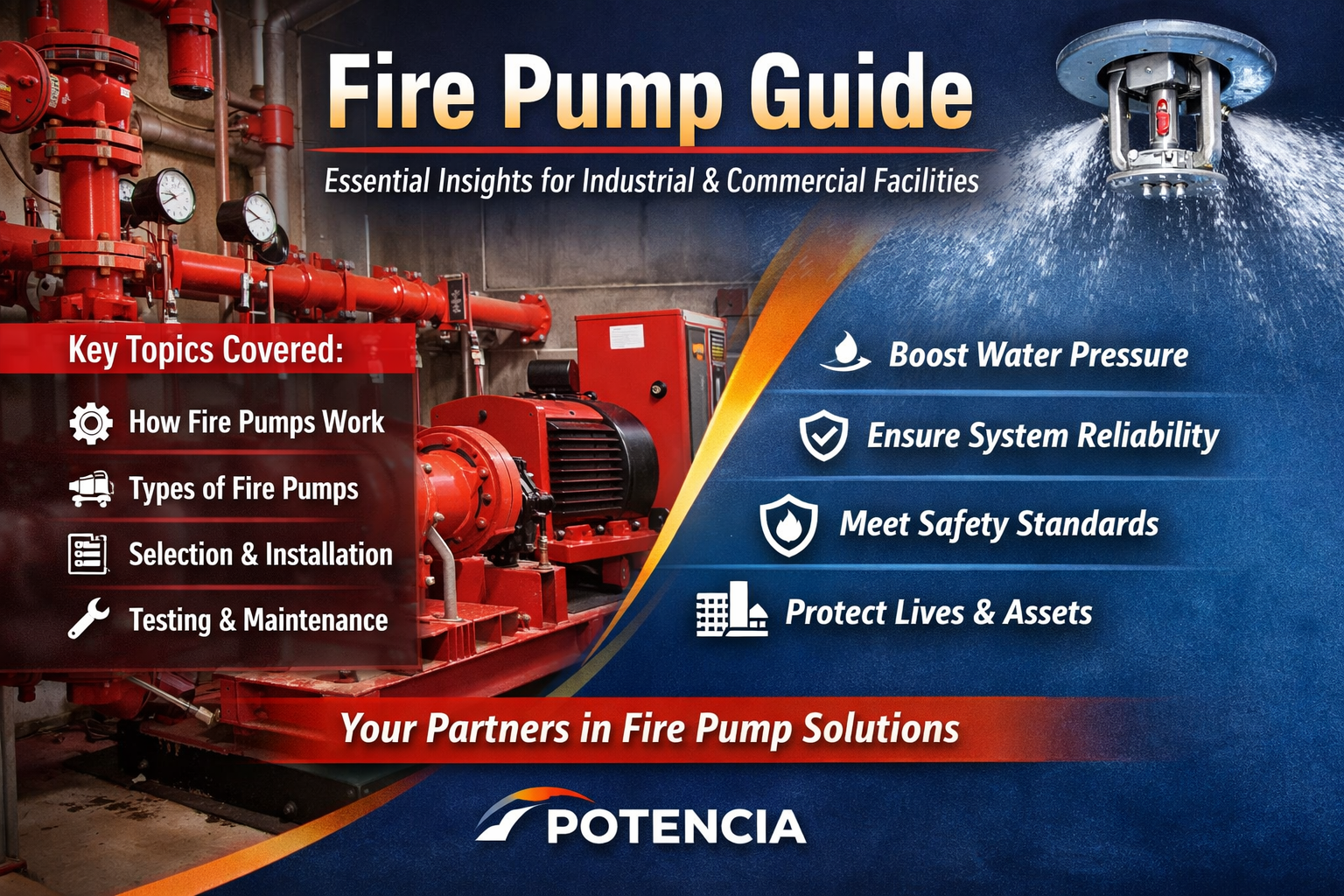
A Practical Guide to Fire Pump Systems for Industrial and Commercial Facilities
In any fire protection system, the fire pump plays a critical role in ensuring that water is delivered at the required pressure and flow when it is needed most. For industrial facilities, commercial buildings, warehouses, and high-risk environments, a properly selected and maintained fire pump system is not just a technical requirement — it is a core element of life safety, asset protection, and operational continuity.
At Potencia, we support clients with practical engineering solutions related to fire pump systems, from technical evaluation and system planning to installation support, testing, inspection readiness, and performance verification.
What Is a Fire Pump?
A fire pump is a key component within a fire protection system designed to increase water pressure when the existing water supply cannot meet the required demand. It ensures that sprinklers, hydrants, hose reels, and other firefighting systems receive sufficient pressure and flow during an emergency.
Fire pumps are commonly used in:
- Industrial plants
- Warehouses
- Commercial buildings
- High-rise developments
- Energy and utility facilities
- Sites with limited municipal water pressure
Why Fire Pump Systems Matter
A fire pump system is essential when the available water source cannot provide the hydraulic performance needed for fire suppression. Without proper pump support, even a well-designed network may fail to deliver the required protection level during a fire event.
A reliable fire pump system helps achieve:
- Adequate pressure for firefighting systems
- Faster emergency response performance
- Improved compliance with fire protection standards
- Better protection for people, property, and critical operations
- Greater confidence during authority inspections and system testing
Main Components of a Fire Pump System
A typical fire pump installation includes several integrated components working together as one system:
1. Fire Pump Unit
The main pump responsible for boosting water pressure.
2. Driver
Usually an electric motor or diesel engine that powers the pump.
3. Jockey Pump
A smaller pump used to maintain system pressure and prevent unnecessary operation of the main fire pump.
4. Controller Panel
Manages automatic and manual pump operation and monitoring.
5. Suction and Discharge Piping
Transfers water from the source through the pump and into the protection network.
6. Relief, Test, and Isolation Valves
Support safe operation, maintenance, and system performance testing.
Common Types of Fire Pumps
The selection of the pump type depends on building demand, available space, water source conditions, and project design requirements.
Common fire pump types include:
- Horizontal split case pumps
- End suction pumps
- Vertical turbine pumps
- Vertical in-line pumps
Each configuration has specific advantages depending on the application, water supply arrangement, and maintenance access requirements.
Key Factors in Selecting a Fire Pump
Choosing the right fire pump is not only about pump size. It requires proper review of the full fire protection system and site conditions.
Important selection considerations include:
- Required flow and pressure
- Hazard classification of the facility
- Water supply reliability
- Pump room conditions
- Power source availability
- Compliance with project specifications and applicable standards
- Testing and maintenance accessibility
At Potencia, our approach focuses on practical project conditions, real operational requirements, and system reliability — not just theoretical sizing.
Installation and System Integration
Proper installation is critical to fire pump performance. Even a correctly selected pump can underperform if installation quality, piping layout, alignment, or control integration are not properly handled.
A successful fire pump installation requires attention to:
- Pump room layout and access
- Foundation and vibration control
- Suction piping configuration
- Electrical or diesel integration
- Control panel coordination
- Pressure maintenance strategy
- Testing provisions and drain arrangements
We help clients ensure that the fire pump system is integrated as part of the overall fire protection and facility operation strategy.
Testing, Commissioning, and Maintenance
A fire pump system should never be treated as a “fit and forget” asset. Regular testing, inspection, and preventive maintenance are necessary to ensure dependable performance when the system is called upon.
Critical activities include:
- Weekly or periodic operational checks
- Controller and alarm verification
- Flow testing and performance confirmation
- Fuel, battery, and engine checks for diesel pumps
- Jockey pump pressure settings review
- Inspection of valves, gauges, and discharge arrangements
- Documentation for audits and authority review
Potencia supports clients in maintaining inspection readiness and ensuring systems remain operationally dependable.
Common Issues That Affect Fire Pump Reliability
Several recurring issues can reduce system performance or create compliance risks, including:
- Improper pump sizing
- Low suction pressure or poor water supply conditions
- Incorrect controller settings
- Unreliable power supply
- Lack of regular testing
- Incomplete documentation
- Poor pump room conditions
- Installation deviations from approved design intent
Identifying these issues early can prevent major operational and safety consequences later.
How Potencia Supports Fire Pump Projects
At Potencia, we understand that fire pump systems must work under real site conditions, not only on paper. Our role is to help clients achieve reliable, compliant, and practical fire protection performance through disciplined technical support.
Our services may include:
- Fire pump system review and technical assessment
- Installation support and coordination
- Testing and commissioning assistance
- Documentation and audit readiness support
- Inspection preparation
- Performance troubleshooting
- Practical recommendations for upgrades and reliability improvement
Conclusion
A fire pump is one of the most important elements in any fire protection infrastructure where pressure demand exceeds the available water supply. Proper selection, installation, testing, and maintenance are essential to system reliability, regulatory confidence, and emergency preparedness.
With the right technical partner, fire pump systems can be planned and managed in a way that supports safety, compliance, and uninterrupted facility operations.
Potencia delivers practical, engineering-focused support for fire pump and fire protection system requirements across industrial and commercial environments.

Comment (1)
Curabitur non erat quam, id volutpat leo. Nullam pretium gravida urna et interdum. Suspendisse in dui tellus. Cras luctus nisl vel risus adipiscing aliquet.